Tampilkan postingan dengan label Subjects. Tampilkan semua postingan

Kamis, 18 November 2021

Girl who loved tom gordon Stephen King fiche de lecture

Girl who loved tom gordon


Girl who loved tom gordon Stephen King fiche de lecture - Book by King StephenRang parmi les ventes Amazon: #102721 dans LivresMarque: Brand: ScribnerPublié le: 2000-02-01Langue d'origine: AnglaisNombre d'articles: 1Dimensions: 6.75" h x .74" l x 4.19" L, .29 livres Reliure: Poche272 pagesExtraitFirst InningMom and Pete gave it a rest as they got their packs and Quilla's wicker plant-collection basket out of the van's back end; Pete even helped Trisha get her pack settled evenly on her back, tightening one of the straps, and she had a moment's foolish hope that now things were going to be all right."Kids got your ponchos?" Mom asked, looking up at the sky. There was still blue up there, but the clouds were thickening in the west. It very likely would rain, but probably not soon enough for Pete to have a satisfying whine about being soaked."I've got mine, Mom!" Trisha chirruped in her oh-boy-waterless-cookware voice.Pete grunted something that might have been yes."Lunches?"Affirmative from Trisha; another low grunt from Pete."Good, because I'm not sharing mine." She locked the Caravan, then led them across the dirt lot toward a sign marked TRAIL WEST, with an arrow beneath. There were maybe a dozen other cars in the lot, all but theirs with out-of-state plates."Bug-spray?" Mom asked as they stepped onto the path leading to the trail. "Trish?""Got it!" she chirruped, not entirely positive she did but not wanting to stop with her back turned so that Mom could have a rummage. That would get Pete going again for sure. If they kept walking, though, he might see something which would interest him, or at least distract him. A raccoon. Maybe a deer. A dinosaur would be good. Trisha giggled."What's funny?" Mom asked."Just me thinks," Trisha replied, and Quilla frowned -- "me thinks" was a Larry McFarland-ism. Well let her frown, Trisha thought. Let her frown all she wants, I'm with her, and I don't complain about it like old grouchy there, but he's still my Dad and I still love him.Trisha touched the brim of her signed cap, as if to prove it."Okay, kids, let's go," Quilla said. "And keep your eyes open.""I hate this," Pete almost groaned -- it was the first clearly articulated thing he'd said since they got out of the van, and Trisha thought: Please God, send something. A deer or a dinosaur or a UFO. Because if you don't, they're going right back at it.God sent nothing but a few mosquito scouts that would no doubt soon be reporting back to the main army that fresh meat was on the move, and by the time they passed a sign reading NO. CONWAY STATION 5.5 MI., the two of them were at it full-bore again, ignoring the woods, ignoring her, ignoring everything but each other. Yatata-yatata-yatata. It was, Trisha thought, like some sick kind of making out.It was a shame, too, because they were missing stuff that was actually pretty neat. The sweet, resiny smell of the pines, for instance, and the way the clouds seemed so close -- less like clouds than like draggles of whitish-gray smoke. She guessed you'd have to be an adult to call something as boring as walking one of your hobbies, but this really wasn't bad. She didn't know if the entire Appalachian Trail was as well-maintained as this -- probably not -- but if it was, she guessed she could understand why people with nothing better to do decided to walk all umpty-thousand miles of it. Trisha thought it was like walking on a broad, winding avenue through the woods. It wasn't paved, of course, and it ran steadily uphill, but it was easy enough walking. There was even a little hut with a pump inside it and a sign which read: WATER TESTS OK FOR DRINKING. PLEASE FILL PRIMER JUG FOR NEXT PERSON.She had a bottle of water in her pack -- a big one with a squeeze-top -- but suddenly all Trisha wanted in the world was to prime the pump in the little hut and get a drink, cold and fresh, from its rusty lip. She would drink and pretend she was Bilbo Baggins, on his way to the Misty Mountains."Mom?" she asked from behind them. "Could we stop long enough to -- ""Making friends is a job, Peter," her mother was saying. She didn't look back at Trisha. "You can't just stand around and wait for kids to come to you.""Mom? Pete? Could we Please stop for just a -- ""You don't understand," he said heatedly. "You don't have a clue. I don't know how things were when you were in junior high, but they're a lot different now.""Pete? Mom? Mommy? There's a pump -- " Actually there was a pump; that was now the grammatically correct way to put it, because the pump was behind them, and getting farther behind all the time."I don't accept that," Mom said briskly, all business, and Trisha thought: No wonder she drives him crazy. Then, resentfully: They don't even know I'm here, The Invisible Girl, that's me. I might as well have stayed home. A mosquito whined in her ear and she slapped at it irritably.They came to a fork in the trail. The main branch -- not quite as wide as an avenue now, but still not bad -- went off to the left, marked by a sign reading NO. CONWAY 5.2. The other branch, smaller and mostly overgrown, read KEZAR NOTCH 10."Guys, I have to pee," said The Invisible Girl, and of course neither of them took any notice; they just headed up the branch which led to North Conway, walking side by side like lovers and looking into each other's faces like lovers and arguing like the bitterest enemies. We should have stayed home, Trisha thought. They could have done this at home, and I could have read a book. The Hobbit again, maybe -- a story about guys who like to walk in the woods."Who cares, I'm peeing," she said sulkily, and walked a little way down the path marked KEZAR NOTCH. Here the pines which had stayed modestly back from the main trail crowded in, reaching with their blueblack branches, and there was underbrush, as well -- clogs and clogs of it. She looked for the shiny leaves that meant poison ivy, poison oak, or poison sumac, and didn't see any...thank God for small favors. Her mother had shown her pictures of those and taught her to identify them two years ago, when life had been happier and simpler. In those days Trisha had gone tramping in the woods with her mother quite a bit. (Pete's bitterest complaint about the trip to Plant-A-Torium was that their mother had wanted to go there. The obvious truth of this seemed to blind him to how selfish he had sounded, harping on it all day long.)On one of their walks, Mom had also taught her how girls peed in the woods. She began by saying, "The most important thing -- maybe the only important thing -- is not to do it in a patch of poison ivy. Now look. Watch me and do it just the way I do it."Trisha now looked both ways, saw no one, and decided she'd get off the trail anyway. The way to Kezar Notch looked hardly used -- little more than an alley compared to the broad thoroughfare of the main trail -- but she still didn't want to squat right in the middle of it. It seemed indecorous.She stepped off the path in the direction of the North Conway fork, and she could still hear them arguing. Later on, after she was good and lost and trying not to believe she might die in the woods, Trisha would remember the last phrase she got in the clear; her brother's hurt, indignant voice: -- don't know why we have to pay for what you guys did wrong!She walked half a dozen steps toward the sound of his voice, stepping carefully around a clump of brambles even though she was wearing jeans instead of shorts. She paused, looked back, and realized she could still see the Kezar Notch path...which meant that anyone coming along it would be able to see her, squatting and peeing with a half-loaded knapsack on her back and a Red Sox cap on her head. Em-bare-ASS-ing, as Pepsi might say (Quilla Andersen had once remarked that Penelope Robichaud's picture should be next to the word vulgar in the dictionary).Trisha went down a mild slope, her sneakers slipping a little in a carpet of last year's dead leaves, and when she got to the bottom she couldn't see the Kezar Notch path anymore. Good. From the other direction, straight ahead through the woods, she heard a man's voice and a girl's answering laughter -- hikers on the main trail, and not far away, by the sound. As Trisha unsnapped her jeans it occurred to her that if her mother and brother paused in their oh-so-interesting argument, looking behind them to see how sis was doing, and saw a strange man and woman instead, they might be worried about her.Good! Give them something else to think about for a few minutes. Something besides themselves.The trick, her mother had told her on that better day in the woods two years ago, wasn't going outdoors -- girls could do that every bit as well as boys -- but to do it without soaking your clothes.Trisha held onto the conveniently jutting branch of a nearby pine, bent her knees, then reached between her legs with her free hand, yanking her pants and her underwear forward and out of the firing line. For a moment nothing happened -- wasn't that just typical -- and Trish sighed. A mosquito whined bloodthirstily around her left ear, and she had no hand free with which to slap at it."Oh waterless cookware!" she said angrily, but it was funny, really quite deliciously stupid and funny, and she began to laugh. As soon as she started laughing she started peeing. When she was done she looked around dubiously for something to blot with and decided -- once more it was her father's phrase -- not to push her luck. She gave her tail a little shake (as if that would really do any good) and then yanked up her pants. When the mosquito buzzed the side of her face again, she slapped it briskly and looked with satisfaction at the small bloody smear in the cup of her palm. "Thought I was unloaded, partner, didn't you?" she said.Trisha turned back toward the slope, and then turned around again as the worst idea of her life came to her. This idea was to go forward instead of backtracking to the Kezar Notch trail. The paths had forked in a Y; she would simply walk across the gap and rejoin the main trail. Piece of cake. There was no chance of getting lost, because she could hear the voices of the other hikers so clearly. There was really no chance of getting lost at all.Copyright © 1999 by Stephen KingRevue de presseThe New York Times Frightening....Feverish terror.San Francisco Examiner A gem....Superb.People An absorbing tale...Tom Gordon scores big.USA Today A delightful read, a literary walk in the woods, and not just for baseball fans.The Wall Street Journal Impressive...A wonderful story of courage, faith, and hope. It is eminently engaging and difficult to put down.New York Daily News A fast, scary read...King blasts a homer...[He] expertly stirs the major ingredients of the American psyche -- our spirituality, fierce love of children, passion for baseball, and collective fear of the bad thing we know lurks on the periphery of life.St. Louis Post-Dispatch King paints a masterful, terrifying picture of every child's (and maybe adult's) worst fear...King uses that creepy-crawly paranoia to perfection.Entertainment Weekly Plenty of thrills...[King's] an elegant writer and a master of pacing.Présentation de l'éditeurThe acclaimed #1 New York Times and undisputed King of Horror Stephen King offers a frightening suspense novel about a young girl who becomes lost in the woods as night falls.On a six-mile hike on the Maine-New Hampshire branch of the Appalachian Trail, nine-year-old Trisha McFarland quickly tires of the constant bickering between her older brother, Pete, and her recently divorced mother. But when she wanders off by herself, and then tries to catch up by attempting a shortcut, she becomes lost in a wilderness maze full of peril and terror. As night falls, Trisha has only her ingenuity as a defense against the elements, and only her courage and faith to withstand her mounting fears. For solace she tunes her Walkman to broadcasts of Boston Red Sox baseball games and follows the gritty performances of her hero, relief pitcher Tom Gordon. And when her radio’s reception begins to fade, Trisha imagines that Tom Gordon is with her—protecting her from an all-too-real enemy who has left a trail of slaughtered animals and mangled trees in the dense, dark woods…

Book's Cover of Girl who loved tom gordon

Details of Girl who loved tom gordon

Le Titre Du LivreGirl who loved tom gordon
AuteurStephen King
Vendu parCampusPress
EAN9780671042851
Nombre de pages272 pages
EditeurCampusPress
Nom de fichiergirl-who-loved-tom-gordon.pdf
Télécharger

Nigella Express Nigella Lawson pdf download

Nigella Express


Nigella Express Nigella Lawson pdf download - No matter how much of a hurry I'm in, or how little time I have, I am never willing to sacrifice flavour: everything I eat has to be delicious.' Nigella Lawson ("Queen of the Kitchen". (Observer Food Monthly)) brings you deliciously quick recipe inspiration for your family and friends - from simple family meals and easy recipes for two to dinner party ideas and effortless entertaining. Whether you're cooking on a budget or planning a feast, Nigella Express makes shopping, cooking and - most importantly - eating a pleasure, not a pain. With over 100 easy meal ideas, from chicken recipes and pasta dishes to chocolate puddings and delicious cakes, you'll never be short of inspiration, however busy your day might be. With luscious photography, evocative food writing and a beautiful hardback design, this is a book you will treasure for many years as well as a delicious gift for friends and family.Features: Everyday Easy - simple suppers; Workday Winners - dinner ideas for friends; Retro Rapido - classic recipes made simple; Get Up and Go - breakfast food; Quick Quick Slow - slow cooking or cooking in advance to save you time; Against the Clock - instant meals with intense flavour; Instant Calmer - healthy recipes to soothe your soul; Razzle Dazzle - quick and easy party menus; Speedy Gonzales - fast Mexican feasts; On the Run - packed lunches and picnics; Hey Presto - instant Italian meals; Holiday Snaps - Christmas and entertaining recipes; and Storecupboard SOS - larder, fridge and freezer standbys.Rang parmi les ventes Amazon: #52556 dans LivresPublié le: 2007-09-06Sorti le: 2007-09-06Langue d'origine: AnglaisNombre d'articles: 1Dimensions: 9.92" h x 1.22" l x 7.87" L, 3.22 livres Reliure: Relié400 pagesExtraitNo Churn Pomegranate Ice CreamIt’s not hard to think of a pudding that can be made in advance. But mostly the advantage is simply that all the effort is upfront and early. The thing about this recipe is that you do it in advance — it’s ice cream, so that stands to reason — but what you do in advance is negligible in terms of effort. You don’t make a custard, and you don’t have to keep whipping it out of the deep freeze to beat the crystals. No, you simply squeeze and stir.On top of that cause for greater contentment, there is also the fact that this delicate pink ice cream tastes like fragrant, sherbety heaven.2 pomegranates (plus seeds from a third for decoration, optional) 1 lime175g icing sugar 500ml double cream1. Juice the pomegranates and the lime and strain the juices into a bowl.2. Add the icing sugar and whisk to dissolve.3. Whisk in the double cream and keep whisking until soft peaks form in the pale pink cream.4. Spoon and smooth the ice cream into the airtight container of your choice and freeze for at least 4 hours, or overnight.5. Scatter with some pomegranate seeds before you eat it.Serves 8 Cherry CheesecakeThis recipe has overturned a lifetime’s prejudice — which is good, but unsettling. I had always been a committed believer that the only true cheesecake was the proper, baked cheesecake, but now I’m not so sure. This improper, unbaked cheesecake, feature of many a seventies’ dessert trolley, has entirely won me over. It’s light, it has tang, and it is rapturously good. The fact that it is speedily easy to make is more reason for general hilarity and joy.Even in the spirit of retro-accuracy, please do not be tempted to open a jar of cherry pie filling over the cake. I use some French cherry concoction that seems to be pretty universally available and has no added sugar, but anything labelled "conserve" as opposed to "jam" should be safe. And, if you feel like it, when cherries are in season, strew the top with a couple of handfuls of beautiful fruit.125g digestive biscuits1/2 teaspoon lemon juice75g soft butter250ml double cream300g cream cheese1 x 284g jar St Dalfour Rhapsodie de60g icing sugarFruit Black Cherry Spread1 teaspoon vanilla extract1. Blitz the biscuits in a food processor until beginning to turn to crumbs, then add the butter and whiz again to make the mixture clump.2. Press this mixture into a 20cm springform tin; press a little up the sides to form a slight ridge.3. Beat together the cream cheese, icing sugar, vanilla extract and lemon juice in a bowl until smooth.4. Lightly whip the double cream, and then fold it into the cream cheese mixture.5. Spoon the cheesecake filling on top of the biscuit base and smooth with a spatula. Put it in the fridge for 3 hours or overnight.6. When you are ready to serve the cheesecake, unmould it and spread the black cherry over the top.Serves 6-8Amaretto SyllabubThis is an Anglo-Italian hybrid: the syllabub is entirely English, though the liqueur makes it Italian in the extreme. The crumbled amaretti biscuits give a trifle-like contrast of soaked sponge and soft cream. Utterly delicious, and the work of moments, this is something you can pull out any time you want to end a dinner party with aplomb. 80ml amaretto liqueur250ml double cream25g caster sugar1 x 250g packet amaretti morbidi 1 x 15ml tablespoon lemon juice (soft almond macaroons)1. Pour the amaretto liqueur into a bowl with the sugar and lemon juice and whisk to mix. 2. Whisk in the double cream and whip this mixture until thickened but still soft and billowy.3. Crumble 2 amaretti biscuits into each of 4 glasses (each with a capacity of about 150ml). 4. Divide the syllabub between the glasses, spooning it on top of the crumbled biscuits.5. Crumble another biscuit or two, and sprinkle this golden rubble over the top of the syllabub in each glass. Serve the remaining amaretti biscuits alongside the syllabub.Serves 4Revue de presse"Featuring fabulous fast foods, ingenious short cuts, terrific time-saving ideas, effortless entertaining and simple, scrumptious meals, Nigella Express is her solution to eating well when time is short" (Mrs D-Daily (Blog))"Full of wonderful, quick ideas with that typical mix of nostalgic, eclectic and delicious that you expect from Nigella" (Easy Living)"One of the appealing things about Nigella's brief introductions to each of them is that she thinks not just as a cook, but as an eater" (Observer)"Once you've seen what Nigella can do for you in 20 minutes, you'll never want anything else" (News of the World)"Busy women everywhere will appreciate a copy of the Domestic Goddess's latest offering...full of practical recipes" (She Magazine)Présentation de l'éditeurTHE DOMESTIC GODDESS IS BACK and this time it's instant. Nigella and her style of cookery have earned a special place in our lives, symbolising all that is best, most pleasurable, most hands-on and least fussy about good food. But that doesn't mean she wants us to spend hours in the kitchen, slaving over a hot stove. Featuring fabulous fast foods, ingenious short cuts, terrific time-saving ideas, effortless entertaining and simple, scrumptious meals, Nigella Express is her solution to eating well when time is short. Here are mouthwatering recipes, quick to prepare, easy to follow, that you can conjure up after a day in the office or at a busy weekend, for family or unexpected guests. This is food you can make as you hit the kitchen running, with vital tips on how to keep your store cupboard stocked, freezer and fridge stacked. When time is precious, you can't spend hours shopping, so you need to make life easier by being prepared. Not that the recipes are basic - though they are always simple - but it's important to make every ingredient earn its place, minimising effort by maximising taste. And here too is great food that can be prepared quickly but cooked slowly in the oven, leaving you time to have a bath, a drink, talk to friends, or do the children's homework. Minimum stress for maximum enjoyment...Nigella's is a new generation of fast food - never basic, never dull, always do-able, quick and delicious.Featuring the recipes seen on TV in BBC Two's Nigella Express series.

Book's Cover of Nigella Express

Details of Nigella Express

Le Titre Du LivreNigella Express
AuteurNigella Lawson
Vendu parChatto & Windus
EAN9780701181840
Nombre de pages400 pages
EditeurChatto & Windus
Nom de fichiernigella-express.pdf
Télécharger

Minggu, 07 November 2021

If This Is A Man/The Truce (Abacus Books) (English Edition) Primo Levi fiche de lecture

If This Is A Man/The Truce (Abacus Books) (English Edition)


If This Is A Man/The Truce (Abacus Books) (English Edition) Primo Levi fiche de lecture - With the moral stamina and intellectual pose of a twentieth-century Titan, this slightly built, duitful, unassuming chemist set out systematically to remember the German hell on earth, steadfastly to think it through, and then to render it comprehensible in lucid, unpretentious prose. He was profoundly in touch with the minutest workings of the most endearing human events and with the most contempible. What has survived in Levi's writing isn't just his memory of the unbearable, but also, in THE PERIODIC TABLE and THE WRENCH, his delight in what made the world exquisite to him. He was himself a "magically endearing man, the most delicately forceful enchanter I've ever known" - PHILIP ROTHClassement des meilleures ventes d'Amazon : 88753
Manufacturer : Abacus

Book's Cover of If This Is A Man/The Truce (Abacus Books) (English Edition)


Télécharger Livres en ligne

Details of If This Is A Man/The Truce (Abacus Books) (English Edition)

Le Titre Du LivreIf This Is A Man/The Truce (Abacus Books) (English Edition)
AuteurPrimo Levi
Vendu parPrimo Levi
Nom de fichierif-this-is-a-man-the-truce-abacus-books-english-edition.pdf

Kamis, 04 November 2021

Great Expectations Charles Dickens pdf francais

Great Expectations


Book's Cover of Great Expectations

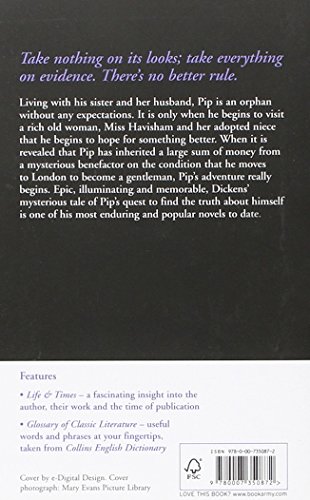
Great Expectations Charles Dickens pdf francais - Book by Dickens CharlesRang parmi les ventes Amazon: #29958 dans LivresMarque: Brand: HarperPressPublié le: 2010-03-26Langue d'origine: AnglaisNombre d'articles: 1Dimensions: 7.00" h x 4.50" l x 1.25" L, .60 livres Reliure: Broché480 pagesExtraitChapter I.My father's family name being Pirrip, and my christian name Philip, myinfant tongue could make of both names nothing longer or more explicit thanPip. So, I called myself Pip, and came to be called Pip.I give Pirrip as my father's family name, on the authority of his tombstoneand my sister – Mrs. Joe Gargery, who married the blacksmith. As I never sawmy father or my mother, and never saw any likeness of either of them (fortheir days were long before the days of photographs), my first fanciesregarding what they were like, were unreasonably derived from theirtombstones. The shape of the letters on my father's, gave me an odd ideathat he was a square, stout, dark man, with curly black hair. From thecharacter and turn of the inscription, "Also Georgiana Wife of the Above,"I drew a childish conclusion that my mother was freckled and sickly. Tofive little stone lozenges, each about a foot and a half long, which werearranged in a neat row beside their grave, and were sacred to the memory offive little brothers of mine – who gave up trying to get a living exceedinglyearly in that universal struggle – I am indebted for a belief I religiouslyentertained that they had all been born on their backs with their hands intheir trousers-pockets, and had never taken them out in this state ofexistence.Ours was the marsh country, down by the river, within as the river wound,twenty miles of the sea. My first most vivid and broad impression of theidentity of things, seems to me to have been gained on a memorable rawafternoon towards evening. At such a time I found out for certain, thatthis bleak place overgrown with nettles was the churchyard; and that PhilipPirrip, late of this parish, and also Georgiana wife of the above, weredead and buried; and that Alexander, Bartholomew, Abraham, Tobias, andRoger, infant children of the aforesaid, were also dead and buried; andthat the dark flat wilderness beyond the churchyard, intersected with dykesand mounds and gates, with scattered cattle feeding on it, was the marshes;and that the low leaden line beyond was the river; and that the distantsavage lair from which the wind was rushing, was the sea; and that thesmall bundle of shivers growing afraid of it all and beginning to cry, wasPip."Hold your noise!" cried a terrible voice, as a man started up from amongthe graves at the side of the church porch. "Keep still, you little devil,or I'll cut your throat!"A fearful man, all in coarse grey, with a great iron on his leg. A man withno hat, and with broken shoes, and with an old rag tied round his head. Aman who had been soaked in water, and smothered in mud, and lamed bystones, and cut by flints, and stung by nettles, and torn by briars; wholimped, and shivered, and glared and growled; and whose teeth chattered inhis head as he seized me by the chin."Oh! Don't cut my throat, sir," I pleaded in terror. "Pray don't do it,sir.""Tell us your name!" said the man. "Quick!""Pip, sir.""Once more," said the man, staring at me. "Give it mouth!"Revue de presse“Great Expectations may be called a novel without a hero . . . In [it] Dickens was really trying to be a quiet, a detached, and even a cynical observer of human life . . . And the final and startling triumph of Dickens is this: that even to this moderate and modern story he gives an incomparable energy which is not moderate and which is not modern. He is trying to be reasonable; but in spite of himself he is inspired.” –G. K. Chesterton “Great Expectations [is] generally regarded as Dickens’s artistic masterpiece, and a novel profoundly serious in its psychological and sociological import . . . Dickens tell[s] a universal story of human passions, mutual exploitation, selfishness, self-delusion, and selflessness . . . [It] is the subtlest and most profound, as well as the most triumphantly achieved, of all his great novels.” –From the Introduction by Michael SlaterPrésentation de l'éditeurCharles Dickens's classic tale of the orphan named Pip.

LIRE DES LIVRES

Details of Great Expectations

Le Titre Du LivreGreat Expectations
AuteurCharles Dickens
Vendu parWilliam Collins
EAN9780007350872
Nombre de pages480 pages
EditeurWilliam Collins
Nom de fichiergreat-expectations.pdf

Selasa, 26 Oktober 2021

Desaparecida Mario Escobar texte complet

Desaparecida


Desaparecida Mario Escobar texte complet -

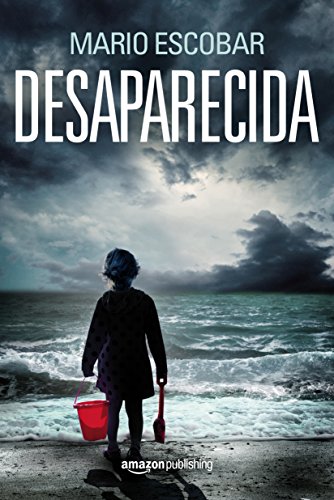
Una vida perfecta puede derrumbarse en cuestión de segundos. Charles y Mary forman un matrimonio que encarna la viva imagen del éxito: él es un próspero hombre de negocios que procede de una familia ilustre de políticos estadounidenses y ella, una cirujana brillante de gran renombre.

Sin embargo, su vida de ensueño se ve truncada por la trágica muerte de su hijo mayor en un accidente de esquí. Los padres, atenazados por el dolor y la pena, deciden pasar el verano en Turquía para empezar a reconstruir su vida junto con su hija pequeña Michelle. Pero las que debían ser unas vacaciones idílicas dan un terrible y abrupto giro cuando la niña desaparece.

La investigación apunta inicialmente a un secuestro cometido por extremistas islámicos o terroristas kurdos, pero las tensas indagaciones del FBI y la policía turca se ven enturbiadas por pistas que señalan a la trata de mujeres y niñas, a oscuros personajes con antecedentes por pedofilia e incluso a los propios padres.

Rang parmi les ventes Amazon: #238284 dans eBooksPublié le: 2016-11-22Sorti le: 2016-11-22Format: Ebook KindlePrésentation de l'éditeurUna vida perfecta puede derrumbarse en cuestión de segundos. Charles y Mary forman un matrimonio que encarna la viva imagen del éxito: él es un próspero hombre de negocios que procede de una familia ilustre de políticos estadounidenses y ella, una cirujana brillante de gran renombre.Sin embargo, su vida de ensueño se ve truncada por la trágica muerte de su hijo mayor en un accidente de esquí. Los padres, atenazados por el dolor y la pena, deciden pasar el verano en Turquía para empezar a reconstruir su vida junto con su hija pequeña Michelle. Pero las que debían ser unas vacaciones idílicas dan un terrible y abrupto giro cuando la niña desaparece.La investigación apunta inicialmente a un secuestro cometido por extremistas islámicos o terroristas kurdos, pero las tensas indagaciones del FBI y la policía turca se ven enturbiadas por pistas que señalan a la trata de mujeres y niñas, a oscuros personajes con antecedentes por pedofilia e incluso a los propios padres.Présentation de l'éditeurUna vida perfecta puede derrumbarse en cuestión de segundos. Charles y Mary forman un matrimonio que encarna la viva imagen del éxito: él es un próspero hombre de negocios que procede de una familia ilustre de políticos estadounidenses y ella, una cirujana brillante de gran renombre.Sin embargo, su vida de ensueño se ve truncada por la trágica muerte de su hijo mayor en un accidente de esquí. Los padres, atenazados por el dolor y la pena, deciden pasar el verano en Turquía para empezar a reconstruir su vida junto con su hija pequeña Michelle. Pero las que debían ser unas vacaciones idílicas dan un terrible y abrupto giro cuando la niña desaparece.La investigación apunta inicialmente a un secuestro cometido por extremistas islámicos o terroristas kurdos, pero las tensas indagaciones del FBI y la policía turca se ven enturbiadas por pistas que señalan a la trata de mujeres y niñas, a oscuros personajes con antecedentes por pedofilia e incluso a los propios padres.Biographie de l'auteurMario Escobar nació en Madrid, es licenciado en Historia y diplomado en Estudios Avanzados, en la especialidad de Historia Moderna. Es novelista, ensayista y conferenciante, director de la revista Nueva historia para el debate y colabora habitualmente con las publicaciones Más allá e Historia National Geographic.Presencia habitual en la lista de 100 libros más vendidos de Amazon, ha publicado obras de diversos géneros entre las que destacan novelas de suspense como El círculo (traducida al inglés, alemán e italiano) o En el lugar más oscuro, y las novelas de ficción histórica Canción de cuna de Auschwitz y El país de las lágrimas.Ha sabido aunar su vocación académica, su pasión por la historia de las religiones y su oficio literario en ensayos de figuras tan relevantes como Martin Luther King o en libros como Francisco, el primer papa latinoamericano (traducido a doce idiomas).

Book's Cover of Desaparecida


Télécharger Livres en ligne

Details of Desaparecida

Le Titre Du LivreDesaparecida
AuteurMario Escobar
Vendu parAmazon Publishing
Livres FormatEbook Kindle
Nombre de pages266 pages
EditeurAmazon Publishing
Nom de fichierdesaparecida.pdf

Sabtu, 23 Oktober 2021

Alexander McCall Smith A Distant View of Everything (Isabel Dalhousie Novels Book 43) (English Edition) pdf download

A Distant View of Everything (Isabel Dalhousie Novels Book 43) (English Edition)

par Alexander McCall Smith
A Distant View of Everything (Isabel Dalhousie Novels Book 43) (English Edition)

Alexander McCall Smith A Distant View of Everything (Isabel Dalhousie Novels Book 43) (English Edition) pdf download - Le téléchargement de ce bel A Distant View of Everything (Isabel Dalhousie Novels Book 43) (English Edition) livre et le lire plus tard. Êtes-vous curieux, qui a écrit ce grand livre? Oui, Alexander McCall Smith est l'auteur pour A Distant View of Everything (Isabel Dalhousie Novels Book 43) (English Edition). Ce livre se composent de plusieurs pages 240. Little, Brown Book Group est la société qui libère A Distant View of Everything (Isabel Dalhousie Novels Book 43) (English Edition) au public. 2017-03-23 est la date de lancement pour la première fois. Lire l'A Distant View of Everything (Isabel Dalhousie Novels Book 43) (English Edition) maintenant, il est le sujet plus intéressant. Toutefois, si vous ne disposez pas de beaucoup de temps à lire, vous pouvez télécharger A Distant View of Everything (Isabel Dalhousie Novels Book 43) (English Edition) à votre appareil et vérifier plus tard.

Isabel Dalhousie now has a second child - another boy, Magnus. He comes home with her at the beginning of the book and she discovers that Charlie is far from thrilled. He sees no need for a new baby.

In Cat's delicatessen, Isabel meets a woman with whom she had been at school. This woman, Bea Shand, is known as an enthusiastic match-maker. She is very worried, though, as she has introduced a woman she knows to a plastic surgeon who is now described by another friend as a gold-digger. This other friend reveals that the surgeon has a bad track record: he has been involved with a series of well-off women and has succeeded in separating a number of then from their money. Bea asks Isabel to investigate; she herself tried to warn her friend of the danger she was in but was rebuffed badly.

Isabel starts to make enquiries. At first the pattern that emerges confirms her friend's dire diagnosis, but as things develop it emerges that not only is the surgeon innocent, but he himself is the one in danger!

In the meantime, as a sub-plot, Isabel finds that the man who warned her of the surgeon's proclivities, is taking an interest in her (Isabel). He appears to be smitten by her; she tries to get away from him but discovers that she has inadvertently given Jamie grounds to believe that she (Isabel) is having an affair. This is awkward, but is resolved satisfactorily.

Her final conclusion: match-make at one's peril. Never tell people half-truths for paternalistic reasons. Mind your own business (a lesson that Isabel never seems to learn).

Rang parmi les ventes Amazon: #3979 dans eBooksPublié le: 2017-03-23Sorti le: 2017-03-23Format: Ebook KindlePrésentation de l'éditeurIsabel Dalhousie now has a second child - another boy, Magnus. He comes home with her at the beginning of the book and she discovers that Charlie is far from thrilled. He sees no need for a new baby.In Cat's delicatessen, Isabel meets a woman with whom she had been at school. This woman, Bea Shand, is known as an enthusiastic match-maker. She is very worried, though, as she has introduced a woman she knows to a plastic surgeon who is now described by another friend as a gold-digger. This other friend reveals that the surgeon has a bad track record: he has been involved with a series of well-off women and has succeeded in separating a number of then from their money. Bea asks Isabel to investigate; she herself tried to warn her friend of the danger she was in but was rebuffed badly.Isabel starts to make enquiries. At first the pattern that emerges confirms her friend's dire diagnosis, but as things develop it emerges that not only is the surgeon innocent, but he himself is the one in danger!In the meantime, as a sub-plot, Isabel finds that the man who warned her of the surgeon's proclivities, is taking an interest in her (Isabel). He appears to be smitten by her; she tries to get away from him but discovers that she has inadvertently given Jamie grounds to believe that she (Isabel) is having an affair. This is awkward, but is resolved satisfactorily.Her final conclusion: match-make at one's peril. Never tell people half-truths for paternalistic reasons. Mind your own business (a lesson that Isabel never seems to learn).ExtraitChapter 1“Adlestrop,” said Isabel Dalhousie.Jamie thought for a moment. They were sitting in their kitchen, on one of those indecisive days that was summer, but not quite yet; a day when the heating might as well be off as on, but when prudence—and superstition—required it still to be kept going. If you lived in Scotland and you turned off your heating too early, then the weather gods—stern, Nordic and unforgiving—could send a body of cold air down from the Arc­tic and remind you that they, not you, were in control.Jamie at least had taken off his sweater—as an act of faith, thought Isabel—while she had kept hers on. One of the news­papers, glimpsed in the local newsagent’s shop, had featured the headline Weathermen say summer will be scorching! but Isabel remembered that this particular newspaper said much the same thing every year, out of concern for its readers, she decided, who otherwise were deprived of good news, and who were desperate for any meteorological crumb of comfort.“Yes, I remember it,” said Jamie, looking at her from over the table. “Although I’ve never been there, of course. It all depends on what one means by remember.” He paused. “Not that I want to sound too much like you, Isabel.”She smiled; the allusion had not been lost on her. They were playing Free Association, a game they sometimes resorted to when conversation failed, when there was no newspaper or magazine to browse, or when there was simply nothing else to think about. Each would come up with a name of a person or a place, and then the other would describe the thoughts that the word triggered. They had not invented it, of course: Isabel was careful to credit Freud for that, even if there were plenty of other practitioners, including Proust, who, she felt, only had to glance at something before he would be off into several pages of triggered memories.Her reference was to the railway station at which Edward Thomas’s train had stopped one day in 1914. Adlestrop—seeing the name on the platform sign had prompted the famous poem: the steam hissed; somebody cleared his throat; no one came or left on the bare platform. Yes. I remember Adlestrop was the first line, and this had been what triggered Jamie’s response. She was proud of him: few people bothered to remember poetry any more, but Jamie did and could reel off screeds of it. “It some­how sticks in my mind,” he once said. “I just remember it. All sorts of poetry.”“Things you learned at school?”He nodded. “Especially those. We were encouraged to commit poems to memory. Shakespeare’s sonnets, Wordsworth, Byron. The lot. Remember Hiawatha? Longfellow’s still there.” He smiled at her. “Or some of it. On the shores of Gitche Gumee, / Of the shining Big-Sea-Water, / Stood . . .”“Nokomis,” supplied Isabel. “My mother loved that poem and read it all to me—all how many stanzas? It goes on forever, doesn’t it? Still, Nokomis . . . Now then . . . Stood Nokomis, the old woman, / Pointing with her finger westward . . .” She paused as the words, with their insistent, repetitive rhythm, came back to her. She had not thought about Nokomis for a long time. Then she continued, “Nokomis sent him off to avenge her father, didn’t she?”“She did,” said Jamie. “It was somewhat vindictive of her, don’t you feel?”“Oh, I think you’re being a bit unfair. Nokomis was right to encourage him to deal with Megissogwon who was, after all, Tall of stature, broad of shoulder, / Dark and terrible in aspect, / Clad from head to foot in wampum . . . My goodness, why did I remember that?”Jamie laughed. “What exactly is wampum? I was never quite sure what the word meant.”“Shell beads,” said Isabel. “They were used as money, as well as being worn. You might describe Wall Street brokers as clad in wampum. I suspect they probably are.”But now it was his turn. Leaning back, looking up at the ceiling, he said, “Glyndebourne.”Isabel’s reply was immediate. It was a rule of Free Association that if you did not reply within ten seconds you lost your turn and the other player had another go. It was a further rule—invented by Jamie—that if you hesitated twice in a row you had to get up and make tea.“Wagner,” she replied.He looked at her. “Glyndebourne doesn’t make me think of Wagner,” he said. “It makes me think of Britten.”She shook her head. “That’s not the point of this game, Jamie. You say the first thing that comes into your head, not into somebody else’s. And another rule is that you can’t argue with the other player’s association. If I say ‘Wagner,’ it’s because I thought of Wagner, and your saying ‘Britten’ counts as a hesita­tion. If you do that again, you have to make us both tea.”He pretended to sulk. “Your go, then.”“Tea,” she said.“Mist,” came the reply.She looked at him enquiringly. “Why mist?”“Now you’re arguing.”She defended herself. “No, I’m not. I’m just interested in why you said ‘mist.’ I’m not saying you can’t think of mist, I was just wondering why.”“Because that’s what I see. I thought of a tea estate some­where up in the hills, in Assam, maybe. And I saw women in saris picking tea leaves.”“Fair enough.” But she was back in Glyndebourne. “I thought of Wagner,” she said, “but not any old Wagner. I thought of Die Meistersinger von Nürnberg.”“Ah.” He looked at her cautiously. He had almost taken a job at Glyndebourne—a long time ago, before they married. That road not taken could have been the end of their relation­ship, and they both skirted around the subject.“Don’t worry,” she said. “It was not an unhappy memory.”And then, years later, they had eventually made it to Glyndebourne together, leaving Charlie in the care of the housekeeper, Grace, who had moved into the house for the weekend. Charlie loved Grace, and she loved him in return, although something in her background—something that Isabel could not fathom—made her adopt a brisk, and slightly distant, manner with chil­dren. “You have to be firm,” she said. “If you aren’t, then they’ll take advantage. They watch us, you know. They look for the slightest excuse to avoid bedtime.”They had flown down to Gatwick and then gone to a pub in the Sussex Downs that had rooms at the back for opera-goers and enthusiasts of real ale. The two groups, sitting in the pub, could not have more easily identifiable had they sported large labels. The beer enthusiasts were bearded and loud; the opera-goers, elegantly dressed and feeling out of place, spoke more quietly than they would do later amongst their own in the opera house bar.It was Isabel’s first visit to Glyndebourne. She had been invited before, once when she was living in Cambridge and again after she had returned to Edinburgh, but had been unable to make it on either occasion. The second of these invitations had come from her niece, Cat, who had been given two tickets by one of her customers, and had offered to take Isabel with her. When Isabel had been unable to go, Cat had gone with a friend, and had complained about the opera, Tippett’s The Knot Garden, which she had not enjoyed.Even Cat, who was musically hard to please, would have luxuriated in The Meistersinger, a rich and spectacular produc­tion. Isabel sat transfixed and had to be prodded by Jamie to return to reality at the interval, when they went off to have din­ner in one of the opera house’s restaurants. And at the end, when they went out into the summer night, the sky still light enough for them to read the programme notes, Isabel did not want the evening to end. But Glyndebourne’s spell was slow to fade, and it was still upon them when they returned to the room they had booked in the pub, and closed the door and lay together on the lumpy double bed, still in their evening clothes, holding hands like two students newly in love, staring up at the ceiling with its uneven ancient beams of darkened oak. And she thought: How extraordinarily fortunate I am to be here, with him, when my life might have been so different if he had not come into it. She looked at him, and loosened his black bow-tie—a gesture that struck her, even as she performed it, as one of ownership. It was a curious feeling—one of . . . what? she wondered. Sexual anticipation? The feeling that you have when you realise that you will be sleeping that evening with the person you most want to sleep with in this world.The game of Free Association might have continued had it not been for the sudden eruption of sound from a small monitor perched on the kitchen dresser.“Magnus,” said Jamie.“Bottles,” said Isabel. “Endless nappies. Sleepless nights.”Jamie laughed. “I had stopped playing Free Association,” he said, pointing to the monitor.“I know,” said Isabel, smiling. “But I couldn’t resist the associations.”Magnus was their second child, who had arrived three months earlier, and who had just signalled that he had woken and was in need of attention. His nap had overlapped with Charlie’s; Charlie, although still sleeping, would shortly wake up too and make his presence felt.“Do you remember what it was like?” said Jamie, as he rose to his feet.“What what was like?”“When we only had Charlie.”Isabel rolled her eyes. “Life was so absurdly simple then.”“Not that I’d change anything,” said Jamie hurriedly. “I love them both to bits.”She knew that he did. He loved his two boys to bits, and she loved them that way too. She also loved Jamie to bits, and he had assured her that he loved her to bits. And if an inventory of affection were being made, she thought of so many things she could add to it: their house in Edinburgh, with its shady gar­den and elusive resident, Brother Fox; their city, with its fragile, spiky beauty, its mists and its skies and its romantic history; and her country too, Scotland, with all its curious quirks and its capacity to break the heart again and again.“I’ll go and get him up,” said Jamie. “I’ll change him if he needs it.”“I’ll entertain Charlie when he wakes,” said Isabel.“How do people who have four or five children cope?” asked Jamie.“Or six?”“Six!”“The older ones look after their younger siblings,” said Isa­bel. “Look at old photographs. Fifty, sixty years ago. Look at pictures showing children in the street—the young ones are holding hands with their older brothers and sisters who are clearly baby-sitting. An eight-year-old would look after a one-year-old, and a six-year-old would look after a four-year-old.”“Everybody looked after everybody else, I suppose.”“They did,” agreed Isabel. “And did so without complaint.”The monitor gave a further squawk. “Yet they didn’t even have monitors,” said Jamie.###Magnus’s arrival on the stage had been two weeks early, brought about, Jamie half seriously suggested, by Isabel having listened to a foot-tapping piece of music from the Penguin Cafe Orchestra. She had closed her eyes as she listened and then opened them suddenly, wide-eyed at the stab of pain.Her breath had been taken away from her, and it was a few moments before she could speak. “She’s coming,” she said. They had been calling the baby “she” although they had asked not to be told what sex it was. Yet they were convinced; it would be a daughter this time. They knew they should not make any assumptions, but somehow they felt certain.Jamie had looked puzzled. “But it’s two weeks . . .”She did not let him finish. “I need to phone the midwife. I need to let them know.”He realised that she was serious. “I’ll take you to the Infir­mary,” he said hurriedly. “Grace can look after Charlie. I’ll phone her right now.”Isabel held up a hand. “Hold on,” she said. “They’ll tell me to wait. We’ll have hours.”But she did not have much time. Things happened quickly, and she was in the labour ward within three hours, Magnus appearing twenty minutes later.“A boy,” said the obstetrician, passing the glistening infant to a waiting nurse.Jamie gasped. They had been so sure.“A little boy,” muttered Isabel.The nursing staff fussed around the baby before handing him to Isabel, loosely wrapped in an off-white cotton blanket. Swaddling clothes, thought Isabel. But this is loose, and is not proper swaddling.Jamie cried, wiping at his tears with the back of his hand. They were tears that came with the cathartic welling up of more than one emotion: relief, sheer joy, love. These had all been his companions at the bedside, where he had sat through Isabel’s short labour; now they found release. A young nurse in train­ing, attending her first birth, was similarly afflicted, struggling to force back her own tears but finding the battle too much. A senior nurse, standing at her side, whispered something in her ear and touched her briefly on the shoulder.“Are you sure he’s a boy?” asked Isabel.The obstetrician peeled off his gloves. “I’ve never been wrong on that one,” he said.The trainee nurse giggled.“You need to get some sleep,” said the senior nurse. She looked at Jamie. “Father too.”“We thought it was going to be a girl,” said Jamie.“Well, there you are,” said the nurse. “You were going to get one or the other, weren’t you?”Isabel held the baby, her cheek pressed lightly against his tiny forehead. She saw that the baby’s blanket had letters printed on it, and they suddenly registered. RIP: what a tactless thing to put on a swaddling blanket, but then she noticed that the letters actually said RIE. The Royal Infirmary of Edinburgh. That was considerably better. The eye could so easily deceive—as when, a few months ago, she had misread a newspaper headline Pope hopes as Pope elopes, and had, for a moment, been both shocked and surprised. Of course now that a pope had broken with long historical practice and retired, it was always possible that a radi­cal successor might feel that the time was ripe to elope. Through the euphoria of the morphine they had given her right at the end, she felt a small niggle of disappointment. She had so wanted a girl, but she knew that she must not allow her­self to think about it. She had a healthy, breathing baby, and that was all that mattered. Perhaps it had been a mistake to remain ignorant of the baby’s sex; the sonographers had found out when they performed the ultrasound scans but at her request had delib­erately not shown her the screen. Perhaps she and Jamie should have asked, because that would have prevented their building up hopes. She had wanted a girl because there were things a mother could do with a girl. They would be friends, as mothers and daughters so often are, and would share their world with each other. This was a boy, and it would be like Charlie all over again; not that she regretted anything about him, but the demands of a boy were different.Jamie held her hand. “Well done,” he whispered.She squeezed his hand. “Twice as many things for you to do now that he’s a boy,” she said drowsily, not knowing exactly what she meant, or why she said it.Revue de pressePraise for Alexander McCall Smith’s Isabel Dalhousie series “Isabel’s search for truth follows a route that offers tantalizing glimpses of Edinburgh’s complex character and a nice, long look into the beautiful mind of a thinking woman.” —The New York Times Book Review “Delicious mental comfort food.” —Los Angeles Times “[Isabel] is by turns fearless, vulnerable, headstrong, and insecure, but always delightful.” —Chicago Tribune “Philosophical inquiries are spontaneous and ongoing, stitched into everyday life and conversation. . . . Genial [and] wise. . . . Glows like a rare jewel.” —Entertainment Weekly “A world where humor is gentle, suffering is acknowledged but not foregrounded, and efforts to do good are usually rewarded. It’s a wonderful place to visit, even if we don’t get to live there.” —The Washington Post “[Isabel] is such good company, it’s hard to believe she’s fictional.” —Newsweek

Nom de fichier : a-distant-view-of-everything-isabel-dalhousie-novels-book-43-english-edition.pdf

Si vous avez un intérêt pour A Distant View of Everything (Isabel Dalhousie Novels Book 43) (English Edition), vous pouvez également lire un livre similaire tel que cc A Time of Love and Tartan (44 Scotland Street Book 12) (English Edition), Sweet, Thoughtful Valentine: An Isabel Dalhousie story (English Edition), The House of Unexpected Sisters (No. 1 Ladies' Detective Agency Book 17) (English Edition), At the Reunion Buffet: An Isabel Dalhousie story (Isabel Dalhousie Novels) (English Edition), The Bertie Project (44 Scotland Street Book 11) (English Edition), My Italian Bulldozer (English Edition), Precious and Grace (No. 1 Ladies' Detective Agency Book 17) (English Edition), The Perils of Morning Coffee: An Isabel Dalhousie story, City of Friends (English Edition), The Charming Quirks Of Others


Senin, 26 Juli 2021

The Summer Book Tove Jansson texte en entier pdf

The Summer Book

Subjects, Tove Jansson


The Summer Book Tove Jansson texte en entier pdf - Le grand livre écrit par Tove Jansson vous devriez lire est The Summer Book. Je suis sûr que vous allez adorer le sujet à l'intérieur de The Summer Book. Vous aurez assez de temps pour lire toutes les pages 184 dans votre temps libre. Le fabricant qui a sorti ce beau livre est NYRB Classics. Obtenez le The Summer Book maintenant, vous ne serez pas déçu par le contenu. Vous pouvez télécharger The Summer Book à votre ordinateur avec des étapes modestes.. Si vous avez décidé de trouver ou lire ce livre, ci-dessous sont des informations sur le détail de The Summer Book pour votre référence.

Livres Couvertures de The Summer Book

de Tove Jansson

4.6 étoiles sur 5 (612 Commentaires client)

Nom de fichier : the-summer-book.pdf

La taille du fichier : 23.86 MB


Si vous avez un intérêt pour The Summer Book, vous pouvez également lire un livre similaire tel que cc A Winter Book: Selected Stories

Herman Melville Bartleby der Schreiber pdf download

Bartleby der Schreiber

par Herman Melville
Bartleby der Schreiber

Herman Melville Bartleby der Schreiber pdf download - Le téléchargement de ce bel Bartleby der Schreiber livre et le lire plus tard. Êtes-vous curieux, qui a écrit ce grand livre? Oui, Herman Melville est l'auteur pour Bartleby der Schreiber. Ce livre se composent de plusieurs pages 50. CreateSpace Independent Publishing Platform est la société qui libère Bartleby der Schreiber au public. 2015-02-11 est la date de lancement pour la première fois. Lire l'Bartleby der Schreiber maintenant, il est le sujet plus intéressant. Toutefois, si vous ne disposez pas de beaucoup de temps à lire, vous pouvez télécharger Bartleby der Schreiber à votre appareil et vérifier plus tard.

Nom de fichier : bartleby-der-schreiber.pdf

Si vous avez un intérêt pour Bartleby der Schreiber, vous pouvez également lire un livre similaire tel que cc Bartleby oder die Formel., Gegen den Strich: (A rebours), Die Blumen des Bösen., Aufzeichnungen eines Wahnsinnigen., Sag alles ab!: Plädoyers für den lebenslangen Generalstreik, Angst (Großdruck), Die Freiheit nehm ich dir. 11KehrseitendesKapitalismus, Der Doppelganger, Der arme Spielmann., Sternstunden der Menschheit